
Hydropower: Projections in a changing climate and impacts by this "clean" source
Energía hidroeléctrica: proyecciones en un clima cambiante e impactos de esta fuente “limpia”
Energia hidrelétrica: projeções em um clima em mudança e impactos desta fonte "limpa"

Sebastian Naranjo-Silva1 , Javier Álvarez del Castillo1
1Roads Management Department. The Polytechnic University of Catalonia. Barcelona-Spain. Email: [email protected], [email protected]
Fecha de recepción: 22 de mayo de 2021.
Fecha de aceptación: 13 de julio de 2021.
ABSTRACT
INTRODUCTION: Hydropower is an extensively used renewable source; in 2016, 159 countries reported benefiting; currently, there are around 9,000 projects in operation due to the competitive cost of generating a similar cost such as thermal energy such as coal, oil, or gas in the range of USD 4 - 5 cents US dollars per kilowatt-hour. OBJECTIVE: Investigate the results of hydroelectric development in the face of the changing climate and the generated impacts, making hydropower a subsector of special attention to discussing the global projection. METHOD: Bibliographic review to reflect on the global context of hydroelectricity based on scientific studies. RESULTS: Hydropower projects a 6% decrease for Europe by 2070, from 20% to 50% throughout the Mediterranean, and a reduction in usable capacity in most hydroelectric plants between 61% for the 2040 scenario– 2069 globally. DISCUSSION AND CONCLUSIONS: Globally, hydropower presents a broad vision of the advantages, and little said about the disadvantages and problems, and only there are specific studies that shown various project studied in a general way. It is shown that hydroelectric production has several implications in the face of the changing climate and impacts generated in ecosystems by the deployment of large infrastructures.
Keywords: energy, future, hydropower, renewable, water.
RESUMEN
INTRODUCCIÓN: La hidroelectricidad es una fuente renovable ampliamente usada; en el año 2016, un total de 159 países reportaron beneficiarse, actualmente existen alrededor de 9,000 proyectos en funcionamiento debido al costo competitivo al generar a un costo similar como la energía térmica como el carbón, petróleo o gas en el rango de USD 4 – 5 centavos de dólar americanos por kilovatio hora. OBJETIVO: Indagar los resultados del desarrollo hidroeléctrico frente al clima cambiante e impactos que se generan, volviendo a la hidroenergía un subsector de especial atención para discutir la proyección global. MÉTODO: Revisión bibliográfica para reflexionar en base a estudios científica el contexto global de la hidroelectricidad. RESULTADOS: La hidroelectricidad proyecta una disminución para Europa en 6% para el año 2070, del 20% al 50% en todo el Mediterráneo, y, reducción de la capacidad utilizable en la mayoría de plantas hidroeléctricas entre el 61% para el escenario 2040–2069 globalmente. DISCUSIÓN Y CONCLUSIONES: Globalmente la hidroenergía presenta una visión amplia de las ventajas y poco se habla de las desventajas y problemas, debido a que solo existen estudios específicos de diversos proyectos estudiados de forma general. Se demuestra que la producción hidroeléctrica tiene varias implicaciones frente al clima cambiante e impactos que se generan en los ecosistemas por el despliegue de grandes infraestructuras.
Palabras claves: agua, energía, hidroelectricidad, renovable.
RESUMO
INTRODUÇÃO: A energia hidrelétrica é uma fonte renovável amplamente utilizada; em 2016, um total de 159 países informaram ter se beneficiado, existem atualmente cerca de 9,000 projetos em operação devido ao custo competitivo de geração de um custo semelhante, como energia térmica, como carvão, óleo ou gás na faixa de US $ 4-5 centavos dólares, por quilowatt-hora. OBJETIVO: Investigar os resultados do desenvolvimento hidrelétrico frente às mudanças climáticas e os impactos que são gerados, tornando a energia hidrelétrica um subsetor de atenção especial para se discutir a projeção global. MÉTODO: Revisão bibliográfica para refletir sobre o contexto global da hidroeletricidade com base em estudos científicos. RESULTADOS: A hidroeletricidade projeta uma redução de 6% para a Europa até 2070, de 20% para 50% em todo o Mediterrâneo, e uma redução da capacidade útil na maioria das usinas hidrelétricas entre 61% para o cenário 2040–2069 globalmente. DISCUSSÃO E CONCLUSÕES: A energia hidrelétrica global apresenta uma visão ampla das vantagens e pouco se fala sobre as desvantagens e problemas, porque existem apenas estudos específicos de vários projetos estudados de uma forma geral. Sendo mostrado que a produção hidrelétrica tem diversas implicações diante das mudanças climáticas e dos impactos que são gerados nos ecossistemas pela implantação de grandes infraestruturas.
Palavras-chave: água, energia, hidroeletricidade, renovável.
INTRODUCTION
Electricity is essential for human life, well-being, and economic development; however, according to a 2010 report, approximately 20% of the world's population remains without access to lighting, refrigeration, good education, or drinking water [1]. Light signifies socio-economic development, during darkness a significant concern. Today, more than 1.2 billion people lack electricity, mainly in Asia and Africa, with around 80% in rural areas [2], [3].
According to the digital journal Global Change Data Lab, registered by Oxford University, around three-quarters of global greenhouse gas emissions come from the burning of fossil fuels for energy. To reduce global emissions, we need to shift our energy and systems away from fossil fuels to low-carbon energy sources; Figure 1 shows the breakdown of global primary energy consumption for 2019 [4].
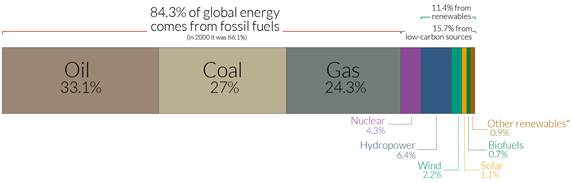
Figure 1. Global primary energy consumption by source. [4]
Despite producing more and more energy from renewables each year, the global energy mix is dominated by coal, oil, and gas. Not only does most of our energy, 84% of it, come from fossil fuels, but we also continue to burn more each year: total production has increased from 116,214 to 136,761 TWh in the last ten years [4], [5].
However, we need to decarbonize the global energy grid, and the development of renewables needs to be a strong strategy; doing the hydropower can expand around the last decades.
Hydroelectric power has been an influential low-carbon energy technology for many countries for more than half a century [6]. Globally, it is still the largest renewable energy source; next, an interactive map in Figure 2 shows the capacity and share of primary energy that comes from hydropower across the world.
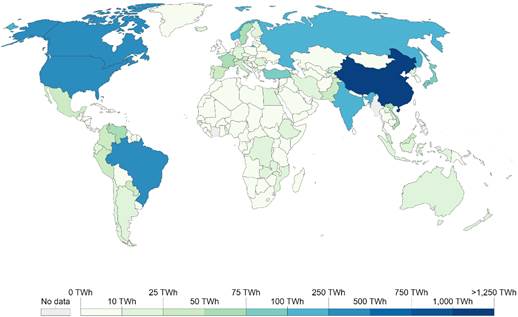
Figure 2. Hydropower generation at 2020 in TWh. [4]
The International Commission on Large Dams mentions that by 2020, more than 9,000 hydroelectric dams registered on every continent, which supplies almost 70% of all renewable energy worldwide [7], [8].
According to the International Renewable Energy Agency (IRENA), in 2016, more than 1 billion people covered their demand with hydroelectricity in 159 countries that reported benefiting. Currently, there are around 9,000 projects in operation due to the competitive cost of generating a similar cost such as thermal energy such as coal [9], [10]. Moreover, in 2018 the global hydroelectric capacity was 1,292 GW, increasing at a compound annual rate of around 3.5% in the last five years [11]. Therefore, currently being built about 160 GW of hydroelectric capacity and are planned over 1 000 MW with around 1200 large dams under construction in 49 countries, mainly in Asia, this 347 are essential with a height more than 60 m [12], [13].
Nonetheless, this hydroelectric energy does not depend on the use of fossil fuels should not make us think that it does not have adverse effects on the environment. The so-called "clean" energies are never clean when they are produced on a large scale because they show a drastic change in the environment, have severe impacts on human lives and natural ecosystems, often irreversible [14], [15].
On the other hand, considering global energy production, an essential factor is the number of hydroelectric plants constantly growing worldwide. However, such facilities carry a wide range of effects that require a solid and in-depth evaluation with a complex interaction of social, ecological, technical or economic impacts, and these effects are bit quantized [16]–[18]. Therefore the need to analyze this type of renewable energy estimated cumulatively requires a billion dollars to compensate for the deterioration of the last 18 years of hydroelectric generation caused by climate change [19].
With the background presented that speaks of hydroelectric deployment as a clean and renewable source, there is much talk about the advantages. However, little is known about the effects, and only there are specific studies that shown each project studied. The reason for which hydroelectric development is an area that requires analysis and study to delineate reflection.
Given these theoretical backgrounds, the study analyzed the future projections for hydroelectricity throughout the world to investigate the results of analysis and simulations of hydroelectric development in the face of a changing climate and impacts generated in ecosystems by large-scale deployment hydroelectric infrastructures.
METHODOLOGY
The methodology consists of the scientific method to develop consolidated concepts, conducting a documentary and bibliographic review of scientific articles published from January 2017 to December 2020. The databases consulted were Science Direct and Scielo.
Keywords selected were used to find the information; the keywords used were three: hydropower projections, the future of hydropower, and hydropower trends, such as represents Figure 3.
By the way, globally, several documents found between protocols, guides, articles, and studies that seek to guide the impacts and projections of hydroelectricity, and consequently, in a world of technology, knowledge, and constant changes, there are reflections and approaches to each topic of different way.
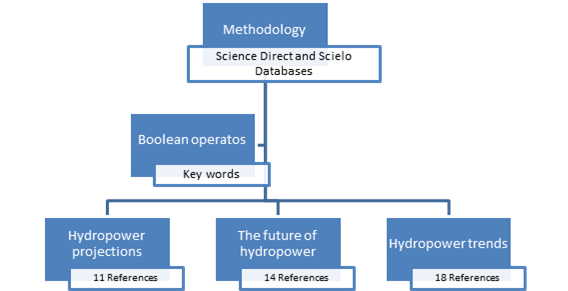
Figure 3. Methodology applied
RESULTS
Fresh water and energy are two essential resources for life; however, the current situation of both and their prospects at a global level are reflected in one word, "scarcity" [20]. Otherwise, seasonal variations, the known effects of climate change, and a growing world population that requires greater demand and competition for water and energy make it time to analyze the hydropower projections [21]. Luis Berga mentions that hydroelectric availability requires careful attention to mitigate the acute effects, and it is probable that climate change will alter river flows [2].
Studies present hydroelectric energy as a source of clean energy and one of the leading renewables globally; however, social, environmental, and economic effects are associated with its use [22]. Also, it expected that the growing human demand would require natural resources at a global level, facing challenges in the coming decades [23]; therefore, hydroelectricity is projected in Table 1.
Table 1. Observations, conclusions, and studies of hydropower projections
|
Item |
Author |
Observations |
|
1 |
Ludovic Gaudard |
It is estimated that the hydroelectric potential for Europe will decrease by 6% by the year 2070, and a stable hydroelectric pattern is projected for Western and Central Europe, and, it is expected, a decrease from 20% to 50% in the entire Mediterranean [24], [25] |
|
2 |
Laura Scherer |
A study of water footprints of 1500 hydropower plants which cover 43% of the global annual hydroelectricity generation, demonstrates that are impacts on water quality and quantity by the hydroelectric development that depends on the consumption of much water, from construction to fill the surface of the reservoir, contributing to water insufficiency on near future [26]. It projected that there would be water reductions in the United States, East Asia, South America, South Africa, and Australia, where substantial temperature increases are programmed combined with reductions in the average annual water flow [27]. |
|
3 |
Matteo Mattmann |
Generates a meta-analysis of the externalities of hydroelectricity based on a database of 81 observations derived from 29 analyzes that assess the impacts on the market of hydroelectric electricity generation where the public aberration towards the construction of hydroelectric projects is evidenced by the change of landscapes, damage of vegetation and death of wildlife. Furthermore, there is resistance to hydroelectric projects in areas where the external negative potential is significant; for example, in conservation areas, it is recommended that the hydroelectric plants designed where they have the least possible impact on the environment and rural communities [28]. |
|
4 |
Michelle Van Vliet |
Presents a global assessment of the vulnerability of hydroelectric and thermoelectric production in the world due to climate change, options for sustainable adaptation of water and energy are tested through coupled hydrological modelling, the study shows a reduction in capacity usable in hydroelectric and thermoelectric plants 61% for the time scenario 2040–2069 [29]. |
|
5 |
Xiaojin Li |
Mentions that a current important industrial activity is hydroelectric development to provide energy and socio-economic benefits. However, large dams, pipes, barriers, and hydroelectric equipment inevitably damage or even destroy ecosystems at different spatial scales, such as forests. The study concludes that the optimal installed capacity of the hydroelectric projects should be higher than 5 MW in future plants because the cost of the ecological loss per kWh is expected to be lower from this capacity [30]. |
|
6 |
Mary Antwi |
In Africa, energy analyzes state that climate change creates social change showing an impact on hydroelectric generation, based on studies showing that climate change will vary up to 3% hydroelectricity by 2050 [31]. Furthermore, the continent can generate an inability to adapt to these changes, giving rise to various threats such as frequent droughts, poverty, diseases, famine, social conflicts, and others throughout the continent [32]. |
|
7 |
Byman Hamududu |
The author studies hydropower production in future climate scenarios on the Zambezi river, the caudal flow that has around of 6 hydropower’s projects; the conclusion shows that Climate change remains a threat to water resources projects in southern Africa, where impacts resulting from climate changes are projected to be harmful and worse in most other world regions [33]. |
As shown in different studies, it is notable that economic growth depends on the energy resource and water, and the two demands have a general requirement, so hydropower development presents challenges for the future [34], [35]. When analyzing global resources, hydroelectric generation is essential for the renewable aspect. However, limited policies, disputes within governments, and lack of international cooperation generate hydroelectric projects with high ecological and social impacts [36], [37].
If the rapid pace of large-scale infrastructure construction of hydroelectric power is maintained, there is a risk of stressing the watersheds and damaging irrigation systems for food production; these problems are expected to intensify with the high population growth and the global economic deficit the Covid-19 [38]. Thus, it recommended to analyze the impacts of hydroelectric energy looking for integrated solutions for the water, energy, and sustainability nexus, because hydroelectric development will play a fundamental role for global energy security but not for water security [39], [40].
On the other hand, interdisciplinary studies question the leading role and ostensible benefits of large-scale hydroelectricity. The possible benefits of hydroelectric generation are improved access to energy, economic development, flood control, reduction of carbon emissions, and others, but generally, these effects are restricted and occur in very remote urban areas [41]. Hence, hydropower will continue to be a controversial energy option in the coming years [42], followed a summary of the negative impacts of hydroelectric development in Figure 4.

Figure 4. Relationship of adverse effects on hydroelectric production. [43]–[46]
As displayed, there are several adverse effects; on a constructive level, hydroelectric dams are one of the largest energy infrastructures in the world, and there is a huge need to build more dams. However, it recommended through a robust political framework with social concerns, environmental protection, ecosystem rehabilitation and transparency constructive [47].
Christiane Zarfl demonstrates that the construction of large future hydropower dams will particularly affect species-rich catchments located in the subtropics and tropics [48]. Weiyao Tang, in a sustainability risk evaluation for large-scale hydropower projects, demonstrates that the eco-environment system is a relatively vital part to consider on the hydropower development, and the most critical specifically factors in controlling sustainability risk are careless on terrestrial animals, aquatic vegetation, fishes and soil [49].
Policymakers, engineers, and builders must embrace methodologies or protocols to prioritize the location of hydropower plants sustainably in different parts of the world [41].
For example, the researcher Wang Hejia to accurately assess the impacts on potential hydroelectric, mentions that a quantitative approach that combines climatology, hydrology, econometrics, and operational research models should be implemented for the future [50].
DISCUSSION AND CONCLUSIONS
Globally, hydropower production presents a broad vision of the advantages, and little said about the disadvantages and problems; hence, several scientific studies show that hydroelectric production has several implications in the changing climate and generated impacts in ecosystems by the development of large infrastructures.
The hydro-energy projects that use the resource in nature for their exploitation demonstrate an extensive and complex system of environmental, social, and cultural effects and impacts with a broad topic of discussion and future research opens up.
Moreover, hydroelectric projects provide "clean" energy and development, depend on a specific, strategic location and an ideal type of infrastructure, which creates problems for using freshwater that contains aquatic life and serves for agro-industrial irrigation downstream of each project.
Hydroelectricity has complex projections worldwide, mainly simulating and forecasting reductions by changing climate, and renewable energies are a global priority. Owing to the sizeable hydroelectric potential that exists, it is necessary to diversify other renewables, like wind and solar energies, to avoid the environment by building gigantic dams and infrastructure that affects the flow of rivers and ecosystems.
It concludes the need to evaluate the current conditions of hydroelectric projects, especially large-scale ones, to favour fair results and projections for all surrounding populations, stakeholders, and ecosystems involved.
SOURCES OF FINANCING
There are no sources of funding for the study; it executed with funds from the authors.
CONFLICT OF INTEREST STATEMENT
The authors declare that there is no conflict of interest.
ARTICLE CONTRIBUTION IN THE RESEARCH LINE
This article contributes to understanding the projected hydroelectric development in the face of the climatic variables presented by an aggressive global industrial and economic development over the last 100 years. In addition, it gives a perspective of hydroelectric energy, despite its renewable nature, causes social and environmental, and cultural effects throughout the places where this source generate. Finally, open a new discussion of hydropower development versus other renewable sources with fewer affections and better prospects.
DECLARATION OF CONTRIBUTION OF EACH AUTHOR
Both authors jointly developed each section of this article.
THANKS
To all the scientists, professors, and authors cited in this article, help develop new knowledge and project development frontiers with forecasting strategies.
REFERENCES
[1] International Energy Agency, “Comparative study on rural electrification policies in emerging economies: Keys to successful policies,” Paris, 2010.
[2] L. Berga, “The Role of Hydropower in Climate Change Mitigation and Adaptation: A Review,” Engineering, vol. 2, no. 3, pp. 313–318, 2016, doi: 10.1016/J.ENG.2016.03.004.
[3] O. Edenhofer et al., “Renewable energy sources and climate change mitigation: Special report of the intergovernmental panel on climate change,” Cambridge, 2011.
[4] H. Ritchie and M. Roser, “Renewable Energy - Our world in data,” London, 2020.
[5] IHA, “Hydropower Status Report 2020,” International Hydropower Association, pp. 1–83, 2020.
[6] S. Ali, D. Li, F. Congbin, and F. Khan, “Twenty-first century climatic and hydrological changes over Upper Indus Basin of Himalayan region of Pakistan,” Environ. Res. Lett., vol. 10, no. 1, p. 14007, 2015, doi: 10.1088/1748-9326/10/1/014007.
[7] ICOLD, “General Synthesis of World register of dams,” 2021. [Online]. Available: https://www.icold-cigb.org/article/GB/world_register/general_synthesis/general-synthesis. [Accessed: 19-May-2021].
[8] C. Llamosas and B. K. Sovacool, “The future of hydropower? A systematic review of the drivers, benefits and governance dynamics of transboundary dams,” Renew. Sustain. Energy Rev., vol. 137, no. 0321, pp. 110–124, 2021, doi: 10.1016/j.rser.2020.110495.
[9] International Renewable Energy Agency, “Renewable Energy Capacity Highlights 2019,” Irena, vol. 00, no. March 2020, pp. 1–3, 2020.
[10] IRENA, “Renewable Energy Statistics 2020. Renewable hydropower (including mixed plants),” 2020.
[11] International Hydropower Association, “Hydropower status report 2019: Sector trends and insights,” 2019.
[12] C. Zarfl, A. E. Lumsdon, J. Berlekamp, L. Tydecks, and K. Tockner, “A global boom in hydropower dam construction,” Aquat. Sci., vol. 77, no. 1, pp. 161–170, 2015, doi: 10.1007/s00027-014-0377-0.
[13] The International Journal on Hydropower, “World atlas and industry guide 2015,” Wallington, 2015.
[14] Crónicas del despojo, “Los efectos negativos de la energía hidroeléctrica,” Bogota, p. 15, Apr-2013.
[15] L. Gnatyshyna, V. Khoma, O. Mishchuk, V. Martinyuk, G. Spriņģe, and O. Stoliar, “Multi-marker study of the responses of the Unio tumidus from the areas of small and micro hydropower plants at the Dniester River Basin, Ukraine,” Environ. Sci. Pollut. Res., vol. 27, no. 10, pp. 11038–11049, 2020, doi: 10.1007/s11356-020-07698-4.
[16] G. Voegeli, W. Hediger, and F. Romerio, “Sustainability assessment of hydropower: Using a causal diagram to seize the importance of impact pathways,” Environ. Impact Assess. Rev., vol. 77, no. October 2018, pp. 69–84, 2019, doi: 10.1016/j.eiar.2019.03.005.
[17] S. Naranjo Silva and J. Álvarez del Castillo, “Análisis de la producción hidroeléctrica en base a las implicaciones en la sostenibilidad energética,” in V Congreso Científico Internacional, retos y perspectivas de las ciudades sostenibles y desarrollo local, 2020, p. 27.
[18] S. Naranjo Silva, D. J. Punina Guerrero, and J. J. Morales Martinez, “Energía solar en paradas de bus una aplicación moderna y vanguardista,” Rev. InGenio, vol. 4, no. 1, pp. 58–68, 2021, doi: 10.18779/ingenio.v4i1.368.
[19] S. W. D. Turner, M. Hejazi, S. H. Kim, L. Clarke, and J. Edmonds, “Climate impacts on hydropower and consequences for global electricity supply investment needs,” Energy, vol. 141, pp. 2081–2090, Dec. 2017, doi: 10.1016/j.energy.2017.11.089.
[20] C. E. Tupiño Salinas, V. P. Vidal de Oliveira, L. Brito, A. V. Ferreira, and J. C. De Araújo, “Social impacts of a large-dam construction: the case of Castanhão, Brazil,” Water Int., vol. 44, no. 8, pp. 871–885, 2019, doi: 10.1080/02508060.2019.1677303.
[21] F. Aguilera-Klink and V. Alcántara, De la economía ambiental a la economía ecológica. Barcelona: Comte d’Urgell, 53, 1994.
[22] J. L. Chiang, H. C. Yang, Y. R. Chen, and M. H. Lee, “Potential impact of climate change on hydropower generation in southern Taiwan,” Energy Procedia, vol. 40, pp. 34–37, 2013, doi: 10.1016/j.egypro.2013.08.005.
[23] N. Johnson et al., “Integrated solutions for the water-energy-land nexus: Are global models rising to the challenge?,” Water (Switzerland), vol. 11, no. 11, p. 33, 2019, doi: 10.3390/w11112223.
[24] B. Lehner, G. Czisch, and S. Vassolo, “The impact of global change on the hydropower potential of Europe: A model-based analysis,” Energy Policy, vol. 33, no. 7, pp. 839–855, 2005, doi: 10.1016/j.enpol.2003.10.018.
[25] L. Gaudard et al., “Climate change impacts on hydropower in the Swiss and Italian Alps,” Sci. Total Environ., vol. 493, pp. 1211–1221, 2014, doi: 10.1016/j.scitotenv.2013.10.012.
[26] L. Scherer and S. Pfister, “Global water footprint assessment of hydropower,” Renew. Energy, vol. 99, pp. 711–720, 2016, doi: 10.1016/j.renene.2016.07.021.
[27] M. Van Vliet, L. Van Beek, S. Eisner, M. Flörke, Y. Wada, and M. F. P. Bierkens, “Multi-model assessment of global hydropower and cooling water discharge potential under climate change,” Glob. Environ. Chang., vol. 40, pp. 156–170, 2016, doi: 10.1016/j.gloenvcha.2016.07.007.
[28] M. Mattmann, I. Logar, and R. Brouwer, “Hydropower externalities: A meta-analysis,” Energy Econ., vol. 57, pp. 66–77, 2016, doi: 10.1016/j.eneco.2016.04.016.
[29] M. Van Vliet, J. Sheffield, D. Wiberg, and E. F. Wood, “Impacts of recent drought and warm years on water resources and electricity supply worldwide,” Environ. Res. Lett., vol. 11, no. 12, pp. 1–11, 2016, doi: 10.1088/1748-9326/11/12/124021.
[30] X. J. Li, J. Zhang, and L. Y. Xu, “An evaluation of ecological losses from hydropower development in Tibet,” Ecol. Eng., vol. 76, pp. 178–185, 2015, doi: 10.1016/j.ecoleng.2014.03.034.
[31] M. Antwi and D. D. Sedegah, “Climate Change and Societal Change—Impact on Hydropower Energy Generation,” in Sustainable Hydropower in West Africa, Elsevier, 2018, pp. 63–73.
[32] H. Kling, P. Stanzel, and M. Fuchs, “Regional Assessment of the Hydropower Potential of Rivers in West Africa,” Energy Procedia, vol. 97, pp. 286–293, 2016, doi: 10.1016/j.egypro.2016.10.002.
[33] B. H. Hamududu and Å. Killingtveit, “Hydropower production in future climate scenarios; the case for the Zambezi River,” Energies, vol. 9, no. 7, pp. 1–18, 2016, doi: 10.3390/en9070502.
[34] S. Tang, J. Chen, P. Sun, Y. Li, P. Yu, and E. Chen, “Current and future hydropower development in Southeast Asia countries (Malaysia, Indonesia, Thailand, and Myanmar),” Energy Policy, vol. 129, no. February, pp. 239–249, 2019, doi: 10.1016/j.enpol.2019.02.036.
[35] S. Lu, W. Dai, Y. Tang, and M. Guo, “A review of the impact of hydropower reservoirs on global climate change,” Sci. Total Environ., vol. 711, p. 134996, 2020, doi: 10.1016/j.scitotenv.2019.134996.
[36] A. Briones Hidrovo, J. Uche, and A. Martínez-Gracia, “Estimating the hidden ecological costs of hydropower through an ecosystem services balance: A case study from Ecuador,” J. Clean. Prod., vol. 233, pp. 33–42, 2019, doi: 10.1016/j.jclepro.2019.06.068.
[37] N. Hofstra, C. Kroeze, M. Flörke, and M. T. Van Vliet, “Editorial overview: Water quality: A new challenge for global scale model development and application,” Curr. Opin. Environ. Sustain., vol. 36, pp. A1–A5, 2019, doi: 10.1016/j.cosust.2019.01.001.
[38] B. Liu, J. R. Lund, L. Liu, S. Liao, G. Li, and C. Cheng, “Climate change impacts on hydropower in Yunnan, China,” Water (Switzerland), vol. 12, no. 1, pp. 1–20, 2020, doi: 10.3390/w12010197.
[39] P. Zhang et al., “Using a hierarchical model framework to assess climate change and hydropower operation impacts on the habitat of an imperiled fish in the Jinsha River, China,” Sci. Total Environ., vol. 646, no. 8, pp. 1624–1638, 2019, doi: 10.1016/j.scitotenv.2018.07.318.
[40] G. Rasul, N. Neupane, A. Hussain, and B. Pasakhala, “Beyond hydropower: towards an integrated solution for water, energy and food security in South Asia,” Int. J. Water Resour. Dev., vol. 00, no. 00, pp. 1–25, 2019, doi: 10.1080/07900627.2019.1579705.
[41] A. R. Ghumman, H. Haider, I. Yousuf, and M. Shafiquzamman, “Sustainable Development of Small-Sized Hydropower Plants: Multilevel Decision-Making from Site Selection to Optimal Design,” Arab. J. Sci. Eng., vol. 45, no. 5, pp. 4141–4159, 2020, doi: 10.1007/s13369-020-04407-8.
[42] B. Van Der Zwaan et al., “Energy technology roll-out for climate change mitigation: A multi-model study for Latin America,” Energy Econ., vol. 56, pp. 526–542, 2015, doi: 10.1016/j.eneco.2015.11.019.
[43] M. N. Ekandjo, H. Makurira, E. Mwelwa, and W. Gumindoga, “Impacts of hydropower dam operations in the Mana Pools National Park floodplains,” Phys. Chem. Earth, vol. 106, no. May, pp. 11–16, 2018, doi: 10.1016/j.pce.2018.05.009.
[44] M. A. Ponce-Jara, M. Castro, M. R. Pelaez-Samaniego, J. L. Espinoza-Abad, and E. Ruiz, “Electricity sector in Ecuador: An overview of the 2007–2017 decade,” Energy Policy, vol. 113, no. August 2017, pp. 513–522, 2018, doi: 10.1016/j.enpol.2017.11.036.
[45] G. S. Mohor, D. A. Rodriguez, J. Tomasella, and J. L. Siqueira Júnior, “Exploratory analyses for the assessment of climate change impacts on the energy production in an Amazon run-of-river hydropower plant,” J. Hydrol. Reg. Stud., vol. 4, no. PB, pp. 41–59, 2015, doi: 10.1016/j.ejrh.2015.04.003.
[46] T. Teräväinen, “Negotiating water and technology-Competing expectations and confronting knowledges in the case of the Coca Codo Sinclair in Ecuador,” Water (Switzerland), vol. 11, no. 3, pp. 1–18, 2019, doi: 10.3390/w11030411.
[47] M. Tan-Mullins, F. Urban, and G. Mang, “Evaluating the Behaviour of Chinese Stakeholders Engaged in Large Hydropower Projects in Asia and Africa,” China Q., vol. 230, pp. 464–488, 2017, doi: 10.1017/S0305741016001041.
[48] C. Zarfl, J. Berlekamp, F. He, S. C. Jähnig, W. Darwall, and K. Tockner, “Future large hydropower dams impact global freshwater megafauna,” Sci. Rep., vol. 9, no. 1, pp. 1–10, 2019, doi: 10.1038/s41598-019-54980-8.
[49] W. Tang, Z. Li, and Y. Tu, “Sustainability risk evaluation for large-scale hydropower projects with hybrid uncertainty,” Sustain., vol. 10, no. 1, pp. 1–19, 2018, doi: 10.3390/su10010138.
[50] H. Wang et al., “Assessment of the impact of climate change on hydropower potential in the Nanliujiang River basin of China,” Energy, vol. 167, pp. 950–959, 2019, doi: 10.1016/j.energy.2018.10.159.
BIOGRAPHIC NOTE

Sebastian Naranjo Silva. ORCID iD
 https://orcid.org/0000-0002-1430-8140
Master of
Science in Production Management. Master Degree in Administration of Energy and
Renewable Sources; and Industrial Engineer. I am a young professional from Ecuador
with around 12 years of work experience in different industries. Nowadays, I am
studying for a PhD in sustainability, and my areas of interest are energy
planning, renewable development, and hydropower.

Javier Alvarez del Castillo. ORCID iD  https://orcid.org/0000-0002-6428-8467
PhD in
Sustainability and Mechanical Engineer specialized in industrial systems in
Barcelona-Spain. Researcher at the Polytechnic University of Catalonia,
Professor of the Chair of Sustainability at United Nations Educational
Scientific and Cultural Organization (UNESCO) at Terrassa Campus.

This work is licensed under the Creative Commons Attribution 4.0 International License. To view a copy of this license, visit http://creativecommons.org/licenses/by/4.0/ or send a letter to Creative Commons, PO Box 1866, Mountain View, CA 94042, USA.